 SEARCH

Eight Years of Meeting People Where They Are: Celebrating MIRA’s Journey
Eight years ago, MIRA began with a simple but transformative idea: essential health care and community resources should not be limited by transportation, language, cost, or the complexity of navigating unfamiliar systems.
Instead of expecting people to find their way through multiple offices and organizations, MIRA would bring trusted support directly to them.
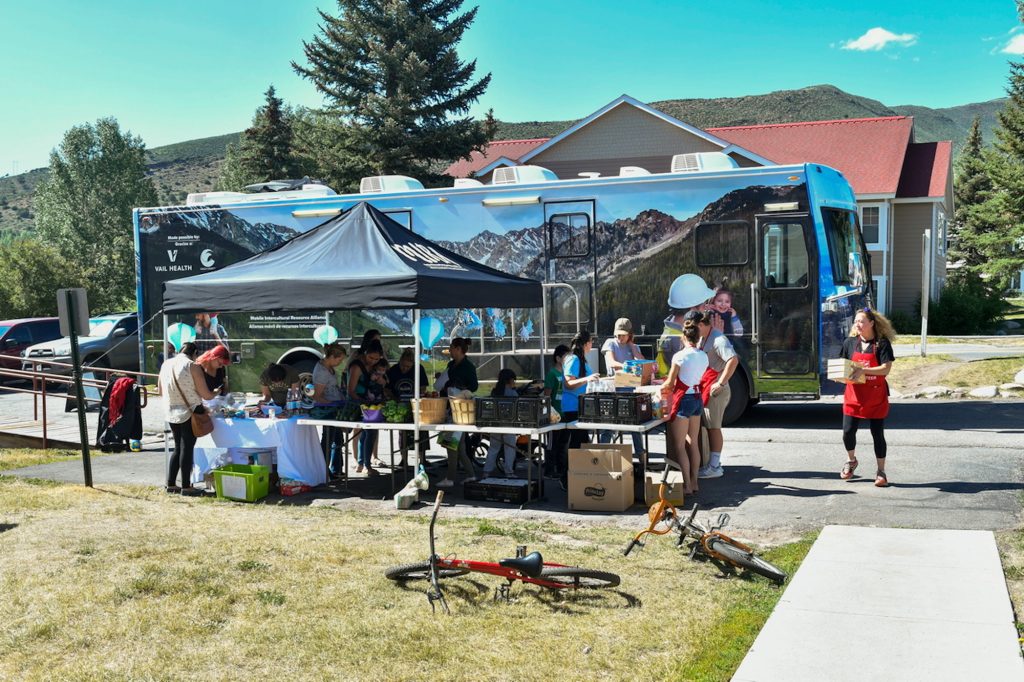
In August 2018, that idea became a reality through an extraordinary community partnership. Vail Health donated a 40-foot vehicle that had previously served as a mobile nurse training unit. With support from Eagle County Public Health and Environment, Eagle Valley Community Foundation, and numerous local partners, the vehicle was transformed into the MIRA bus: the Mobile Intercultural Resource Alliance.
From the beginning, leaders including Melina Valsecia and Chris Lindley understood that improving community health would require more than simply providing medical services. It would require building trust, listening carefully, and addressing the many barriers that influence a person’s ability to live a healthy and stable life.
MIRA was designed as a mobile, culturally relevant resource center that could travel to neighborhoods, schools, workplaces, community events, and rural areas throughout Eagle County. During its first two years, MIRA connected with more than 12,700 community members and established regular service locations across 19 communities.
A Model Built for Moments of Crisis
MIRA’s value became clear almost immediately.
Shortly after launching, the bus supported families affected by the Lake Christine Fire. When the COVID-19 pandemic arrived less than two years later, MIRA once again became a critical point of connection for the community.
During a period marked by fear, isolation, rapidly changing information, and significant economic uncertainty, MIRA helped thousands of residents access COVID-19 testing, food, formula, behavioral health information, and other essential resources. The bus provided services in familiar locations and through trusted bilingual staff at a time when many community members were unsure where else to turn.
The pandemic demonstrated exactly why MIRA had been created. Because relationships and infrastructure were already in place, the program could respond quickly when the community’s needs changed.
MIRA was not simply a vehicle delivering services. It had become a trusted bridge between families and the organizations working to support them.
Growing from Emergency Response to Preventive Care
As Eagle County emerged from the most urgent years of the pandemic, MIRA continued to evolve.
The partnerships that made emergency testing and resource distribution possible expanded into a broader model of preventive health care. Immunizations became an increasingly important part of MIRA’s work, helping children and adults receive routine vaccines in accessible community locations.
Vail Health, Eagle County Public Health and Environment, Eagle County Paramedic Services, Mountain Family Health Centers, and other medical partners strengthened the health services available through the program. In 2021, several of these partners created a Community Health Program to provide basic screenings and connect uninsured residents with ongoing primary care. Eagle County Paramedics continue to provide screenings and health education through MIRA, while residents can also be connected to providers for longer-term care.
These collaborations have allowed community members to receive blood pressure, glucose, cholesterol, and other preventive screenings close to home. For some residents, a visit to MIRA is their first health assessment in years. Early identification of a concern can lead to treatment before it becomes a medical emergency.
MIRA’s reach has also extended west through collaboration with Mountain Family Health Centers and MidValley Family Practice in El Jebel, helping connect residents in the Roaring Fork Valley with health services and trusted local providers.
Creating Opportunities for Health Education
Over time, MIRA’s work has grown beyond individual appointments and resource navigation to include community health education events.
These events bring multiple partners together in one welcoming location, allowing families to receive screenings, immunizations, nutrition education, insurance assistance, legal information, behavioral health resources, and referrals during a single visit.
Health fairs, women’s health events, family celebrations, perinatal education, cancer prevention activities, and other community gatherings have helped MIRA reach residents who may never walk into a traditional health care or government office.
The events are also designed around community feedback. MIRA staff listen to what residents are experiencing and invite partners who can respond to those needs. This approach makes health education practical, culturally relevant, and connected to the realities of everyday life.
Today, MIRA provides health education, screenings, immunizations, assistance with Medicaid, SNAP and WIC enrollment, food access, perinatal resources, referrals to medical and dental care, and connections to behavioral health and family services.
Expanding Behavioral Health Through MIRA Esperanza
One of the most significant additions to MIRA has been MIRA Esperanza.
For many Spanish-speaking and immigrant families, behavioral health care can be especially difficult to access. Cost, language, stigma, limited provider availability, and concerns about navigating unfamiliar systems can prevent people from seeking support.
MIRA Esperanza helps remove those barriers by connecting community members with free, culturally responsive, Spanish-language therapy and behavioral health resources. Through individual and couples counseling, perinatal mental health support, screenings, referrals, and education, the program creates an accessible entry point for people experiencing anxiety, depression, trauma, relationship challenges, or other concerns.
Because these services are connected to a program that families already know and trust, people can ask for help in an environment grounded in dignity, confidentiality, and cultural understanding.
Two Buses and a Greater Ability to Serve
As demand for MIRA’s services continued to increase, it became clear that one vehicle could no longer meet the full needs of the community.
The addition of a second MIRA bus represents far more than additional transportation. It provides greater flexibility, reliability, and capacity. With two mobile units, MIRA can serve more neighborhoods, support larger community events, reduce disruptions when a vehicle requires maintenance, and bring different services to multiple locations.
The second bus is a visible symbol of how far MIRA has come.
What began as one repurposed nurse training unit has grown into two mobile health and resource centers supported by bilingual community health workers, medical providers, public agencies, nonprofit organizations, volunteers, donors, and residents.
Eight Years of Community Collaboration
MIRA’s story belongs to every person and organization that believed care should be brought closer to the people who need it.
We are deeply grateful to Vail Health for helping launch this vision through the donation of the original vehicle and for its continued investment in community health. We recognize Eagle County Public Health and Environment for its foundational leadership and the early vision of Melina Valsecia and Chris Lindley, whose commitment helped turn a creative idea into a trusted community institution.
We also thank Eagle County Paramedic Services, Mountain Family Health Centers, MidValley Family Practice, local health providers, nonprofit partners, volunteers, donors, and the many organizations that bring their expertise directly to the bus.
Most importantly, we thank the community members who welcomed MIRA into their neighborhoods, shared their experiences, asked important questions, and helped shape the program.
Over eight years, MIRA has responded to wildfires, a global pandemic, growing health disparities, changing insurance systems, behavioral health needs, and increasing demand for preventive care. Through every stage, its purpose has remained constant: to meet people where they are, listen to what they need, and connect them with the care and resources they deserve.
MIRA started as a bus.
Today, it is a trusted network of people, partnerships, and possibilities working together to build a healthier and more connected community.